
Business 109
Dacia CEO Urges EU to Freeze Small Car Rules to Cut Prices
In this issue
Business 109
Dacia CEO Urges EU to Freeze Small Car Rules to Cut Prices
Culture 89
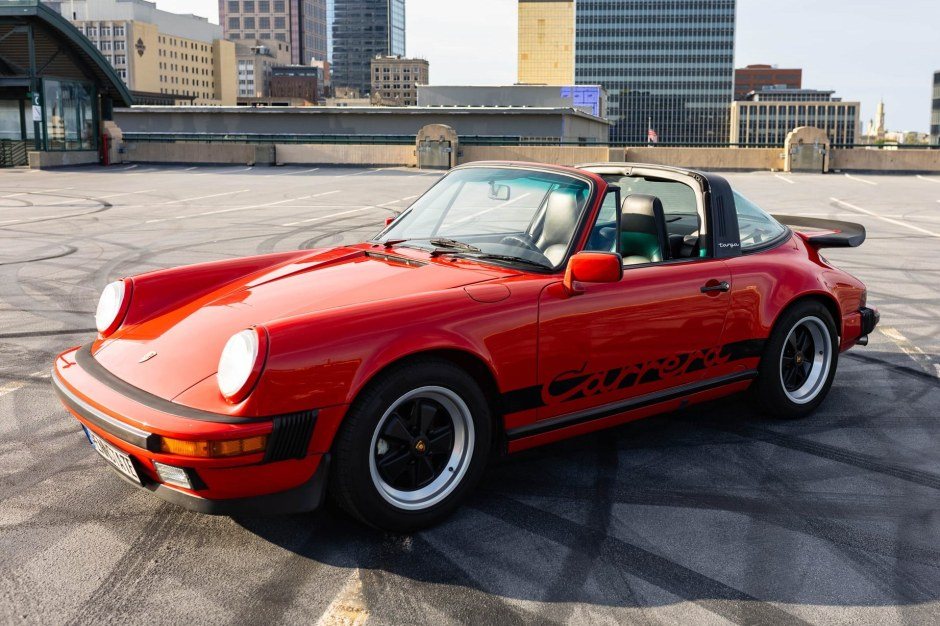
1988 Porsche 911 Carrera Targa G50 with Rebuilt Engine Heads to Auction
Economy 30
HMRC is writing to low earners about pension top-ups averaging about £70
News 124
Aftermarket Trackers Recover 99% of Stolen Cars as Factory Systems Fail
Politics 104
Met police open inquiry into alleged foreign donations to Reform UK
Sports 231
AMG GT Black Series Spied With Radical Aero Ahead of Nürburgring Record Attempt
Technology 116
Waymo Expands Driverless Ride-Hailing to Las Vegas
Unilever has announced its strongest sales growth in more than ten years, prompting the company to upgrade its full-year sales outlook. The results come as the consumer goods giant prepares to spin off its food division, including brands such as Marmite and Ben & Jerry's.
By Charlotte Redford · 4 min read
Unilever has reported its strongest sales performance in over a decade, driven by robust demand across its beauty, personal care, and home care categories. The consumer goods giant, whose portfolio includes brands such as Dove, Rexona, and Persil, said it has raised its annual sales outlook following a solid first half of the financial year.
The company, which is in the midst of a major strategic restructuring, confirmed that underlying sales grew ahead of expectations. This marks the highest growth rate in more than ten years, with particular strength in emerging markets and a steady recovery in Europe. The improved performance has led management to increase the full-year underlying sales growth forecast, citing continued momentum and effective brand investment.
The upbeat results come at a pivotal moment for Unilever as it prepares to spin off its food business, which includes well-known brands such as Marmite, Ben & Jerry's, and Magnum. The separation, announced earlier this year, is intended to allow the company to focus on higher-margin categories like beauty and wellbeing, while the food division will operate as a standalone entity. Unilever expects the demerger to be completed by the end of 2026, subject to shareholder and regulatory approvals.
Chief executive Hein Schumacher, who took the helm in 2023, described the first-half performance as proof that the company's growth strategy is delivering results. He highlighted the success of premium product innovations and the expansion of distribution channels, particularly in Asia and Latin America. Schumacher also noted that the company has managed to maintain pricing discipline despite persistent input cost pressures, helping to protect margins.
The decision to spin off the food business follows years of debate among investors about the conglomerate's structure. Activist investors had pushed for a breakup, arguing that the food division was dragging down overall valuation and growth potential. By separating the slower-growing food unit from the faster-paced personal care segment, Unilever aims to unlock shareholder value and sharpen strategic focus.
Analysts have broadly welcomed the move, though some caution that the separation process is complex and could take longer than anticipated. The food business, which also includes brands such as Hellmann's mayonnaise and Knorr stock cubes, generated around €12 billion in annual revenue. As a standalone company, it will face challenges from private-label competition and changing consumer preferences toward healthier options.
Unilever's raised outlook is a positive signal for investors, especially at a time when many consumer goods companies are struggling with sluggish demand in developed markets. The company now expects underlying sales growth for the full year to be above its previously communicated range of 3% to 5%. While specific figures were not disclosed, the upgrade suggests confidence that the strong performance in the first half will continue through the second half of the year.
The stock market reacted favourably to the news, with Unilever shares rising in early trading in London. The company's focus on premiumisation and portfolio optimisation appears to be paying off, even as global economic uncertainty persists. With the food spin-off on track, Unilever is positioning itself as a leaner, more agile player in the fast-moving consumer goods sector.