Business 234
Geely's compact EV hits one million sales in two years
In this issue
Business 234
Geely's compact EV hits one million sales in two years
Culture 271
LS2-Powered 1989 Jeep Wrangler Laredo Heads to Auction
Economy 41
German Economists Set Income Threshold for the Upper Class
News 158
EU Loosens 2035 Emissions Targets in Move That Could Keep Petrol Cars Alive
Politics 115
Burnham launches crackdown on loud music on public transport
Sports 280
Tottenham beat Coventry as De Zerbi faces injury concerns
Technology 320
LiveWire to Unveil Two New Electric Motorcycles at EICMA
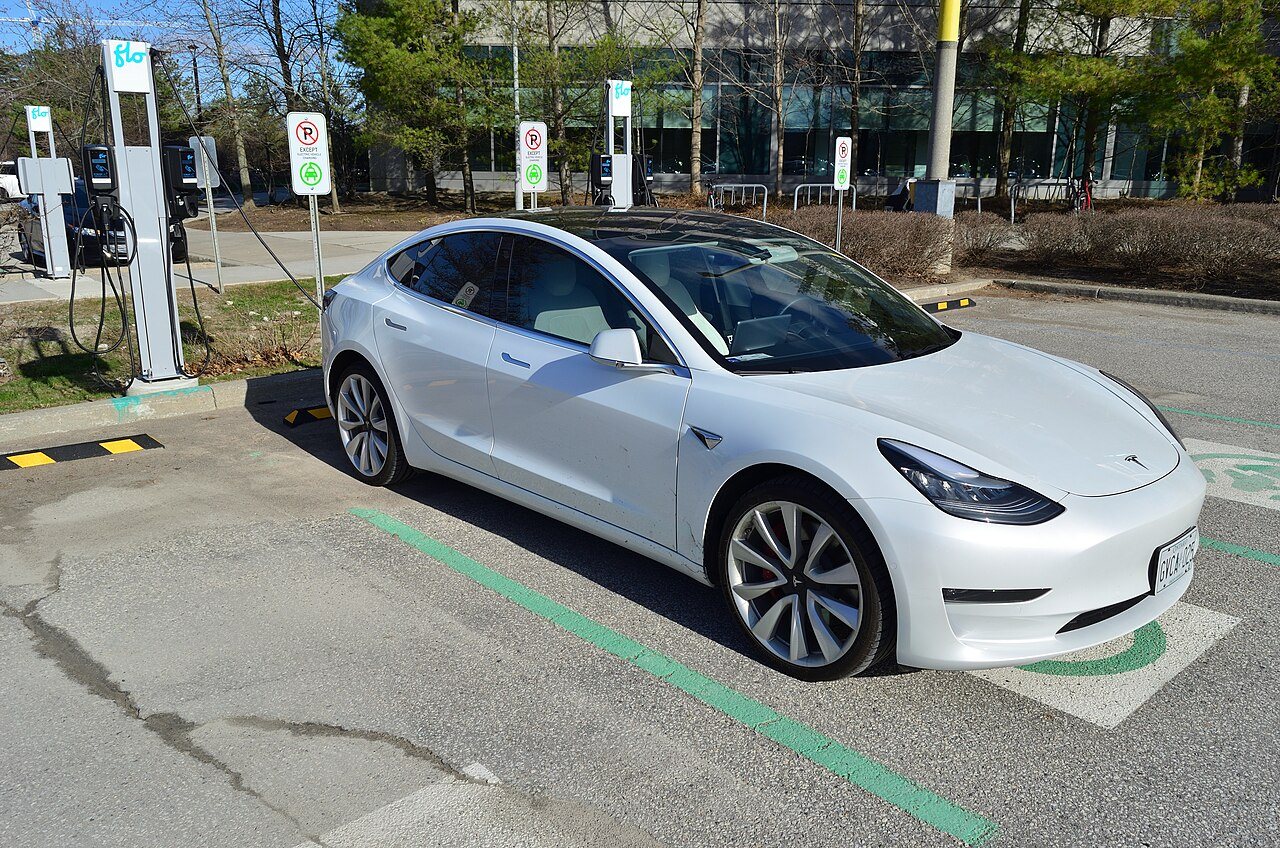
Valuation specialist Brego finds used luxury electric cars from Mercedes-Benz, Porsche, Volvo and Genesis retain less value than their combustion-engine equivalents, with the gap widening over time and prompting calls for fleets to reconsider choice lists.
By Eleanor Ellington · 5 min read
Used luxury electric cars are losing value faster than their petrol and diesel equivalents, according to valuation specialist Brego, in a trend that could reshape the choice lists used by company fleets. Forecast data comparing electric and combustion-engine luxury models from Mercedes-Benz, Porsche, Volvo and Genesis shows an average retail residual value gap of 1.9% at one year old, narrowing to 0.7% at two years before widening again to 0.9% at three years and 1.3% at four years — all in favour of the internal combustion engine version.
The models examined were the Mercedes EQS and S-Class, the Porsche Taycan and Cayenne, the Volvo XC90 and EX90, and the Genesis G80 and Electrified G80. Mercedes recorded the starkest divergence, with the combustion-engine car holding a 5.9% advantage at one year old, 5.4% at two years, 6.3% at three years and 6.4% at four years. Volvo was the only manufacturer of the four where the bias favoured the electric model, consistently across the four years and widening over time: 0.8% at one year, 1.4% at two years, 1.6% at three years and 1.9% at four years.
Rupert Pontin, Brego's head of insight and communication, said the lower residual value percentage for luxury EVs is partly driven by the pace of battery development. He pointed to the coming arrival of solid-state batteries, which could double the range of today's models, and questioned who would want a used luxury car — often used as a chauffeur or private hire vehicle — once newer technology had moved the benchmark. Even without a leap to solid-state, he said, constant battery evolution is a factor.
The issue has been amplified by tax policy. When benefit-in-kind tax on electric company cars fell to 0% in April 2020, some drivers opted for prestigious, well-specified EVs where employers and suppliers allowed it, choosing models far above the likes of a BMW 3 Series. That rate has since risen to 4% and is set to reach 9% in 2029/2030, though it remains well below the rates applied to combustion-engine cars.
Peter Golding, managing director of fleet software and management specialist Fleetcheck, said expensive, heavily equipped cars are not helping EVs establish themselves in the used market. He called for greater emphasis on reasonably priced models with middling levels of equipment, noting that more economical Chinese imports are now addressing the sub-£30,000 to £40,000 bracket and will feed desirable vehicles to second and third owners. He warned that complex, costly flagship models become very cheap by the time they reach a third owner because buyers worry about expensive failures, and urged companies to be more discerning with choice lists and include vehicles likely to hold better resale values.
Pontin agreed that the used market would benefit from more affordable EVs, saying cost is the key to getting people into them. But he argued there remains a market for lavishly specified cars among second, third and fourth owners, who want the equipment — though features such as advanced suspension, electric seats, massage functions and panoramic roofs are costly to repair, which is where the bigger problem lies.
The sensitivity of used EV values to technological change is not new. The Nissan Leaf and Renault Zoe came under frequent scrutiny in the 2010s, when specialists predicted their desirability would suffer once models with more advanced batteries and longer ranges arrived. Battery development has remained a recurring theme for residual value specialists ever since.
Demand from used buyers seeking lower running costs has nonetheless been strong. Brego's data shows used EV sales peaked at around 37,000 per month in March and April 2026, softening to between 29,000 and 32,000 from May to August but remaining well above the 2025 monthly average of 22,790.
15