
Business 110
Dacia CEO Urges EU to Freeze Small Car Rules to Cut Prices
In this issue
Business 110
Dacia CEO Urges EU to Freeze Small Car Rules to Cut Prices
Culture 89
1988 Porsche 911 Carrera Targa G50 with Rebuilt Engine Heads to Auction
Economy 29
HMRC is writing to low earners about pension top-ups averaging about £70
News 124
Aftermarket Trackers Recover 99% of Stolen Cars as Factory Systems Fail
Politics 104
Met police open inquiry into alleged foreign donations to Reform UK
Sports 231
AMG GT Black Series Spied With Radical Aero Ahead of Nürburgring Record Attempt
Technology 117
BMW Confirms Next 3 Series Will Retain Plug-In Hybrid Power
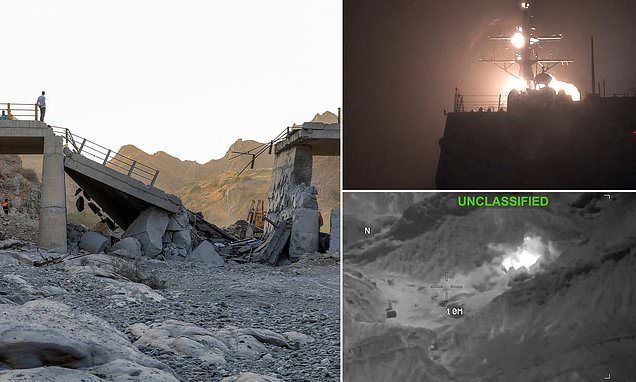
Iran’s Revolutionary Guard vows to prevent oil and gas shipments through the Strait of Hormuz, while the US carries out a ninth consecutive night of airstrikes on Iranian military targets, sending oil prices above $90 a barrel.
By Eleanor Ellington · 4 min read
Iran’s Revolutionary Guard has declared that not a single drop of oil or gas will be allowed to pass through the Strait of Hormuz, as the United States conducted its ninth night of airstrikes on Iranian military positions. The escalation, which has pushed global oil prices above $90 a barrel, marks a significant intensification of the conflict between the two nations.
The price of Brent crude for September delivery rose 2.72% to $90.50 a barrel in early Asian trade on Monday, briefly crossing $91 — its highest level since June. The surge followed the latest wave of US strikes and reports of a vessel catching fire in the strategic waterway, through which about a fifth of the world’s oil passes.
US Central Command (CENTCOM) said its forces targeted Iranian military command centres, air defence systems, coastal surveillance sites, maritime capabilities, missile and drone launch sites, and communications networks. The stated aim was to further diminish Iran’s ability to attack commercial vessels and civilian mariners transiting the Strait of Hormuz. The US military said it was holding Iran accountable at the direction of the commander in chief.
The ninth night of strikes comes after a US service member died in a controlled explosion in Iraq, and follows earlier Iranian attacks that killed three American soldiers. President Donald Trump said the US had hit Iran very hard, vowing to continue the campaign until Iran ceases its aggression.
Iran’s supreme leader, Ayatollah Ali Khamenei, warned that the US would receive unforgettable lessons if it kept attacking the country. The Revolutionary Guard claimed it had targeted US aircraft in Jordan and stopped two tankers in the Strait of Hormuz, though these claims could not be independently verified.
The standoff has raised fears of a broader regional conflict, with the Strait of Hormuz being a critical chokepoint for global energy supplies. Analysts warn that any sustained disruption to shipping through the strait could send oil prices even higher, potentially triggering a global economic slowdown. The International Energy Agency has previously estimated that about 17 million barrels of oil per day pass through the waterway.
The US has been building up its military presence in the region, including deploying additional aircraft carriers and fighter jets. The strikes are part of a campaign that began after Iran launched a drone and missile attack on US forces in the region, which Washington says was carried out with support from Chinese satellite technology. China has denied providing such assistance.
Diplomatic efforts to de-escalate the crisis have so far failed, with both sides refusing to back down. The United Nations has called for an immediate ceasefire, but the US has insisted that Iran must first halt its attacks on commercial shipping and US forces. Iran, in turn, demands an end to US strikes and the lifting of sanctions.
The conflict has already had significant economic consequences. Global stock markets have fallen, and shipping insurance premiums for vessels transiting the Persian Gulf have skyrocketed. Several major shipping companies have suspended operations in the region, further disrupting supply chains.
As the crisis enters its tenth day, the international community is watching closely for any signs of a diplomatic breakthrough or further escalation. The US has not ruled out additional military action, while Iran has warned that it could close the Strait of Hormuz entirely if its security is threatened.