
Business 110
Dacia CEO Urges EU to Freeze Small Car Rules to Cut Prices
In this issue
Business 110
Dacia CEO Urges EU to Freeze Small Car Rules to Cut Prices
Culture 89
1988 Porsche 911 Carrera Targa G50 with Rebuilt Engine Heads to Auction
Economy 29
HMRC is writing to low earners about pension top-ups averaging about £70
News 124
Aftermarket Trackers Recover 99% of Stolen Cars as Factory Systems Fail
Politics 104
Met police open inquiry into alleged foreign donations to Reform UK
Sports 231
AMG GT Black Series Spied With Radical Aero Ahead of Nürburgring Record Attempt
Technology 116
Waymo Expands Driverless Ride-Hailing to Las Vegas
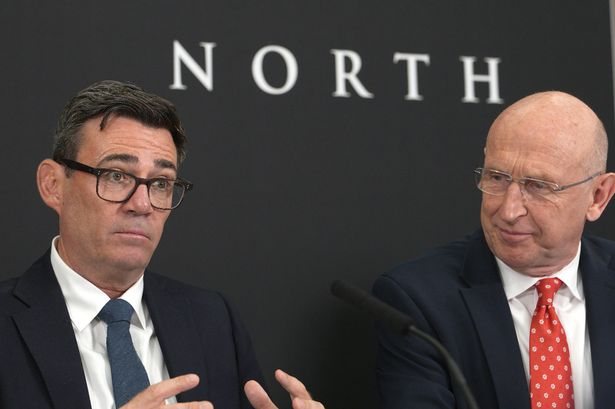
Prime Minister Andy Burnham has announced a significant devolution package that will allow directly elected mayors in England to keep a share of income tax and business rates collected in their regions for local investment.
By Charlotte Redford · 5 min read
Prime Minister Andy Burnham has announced a sweeping devolution package that will allow directly elected mayors across England to retain a share of income tax and business rates raised in their regions. The revenue, which would otherwise flow to the Treasury, will instead be redirected towards local infrastructure, transport, housing, and community projects, giving regional leaders greater control over spending priorities.
The policy, which Burnham described as a «devolution revolution», marks a significant shift of fiscal power away from Whitehall and down to local government. While the exact proportion of tax revenue that mayors will be able to keep has not yet been specified, government officials said the details would be worked out in consultation with combined authorities and regional administrations. The prime minister emphasised that the aim is to ensure communities benefit directly from the economic activity they generate.
Speaking at a press conference in Westminster, Burnham said: «I know what it’s like to be ignored by politicians in Westminster — I’m not going to make that same mistake now I’m PM.» The announcement is the latest in a series of measures intended to reverse decades of centralisation and to address persistent regional inequalities across England. Burnham, who previously served as Mayor of Greater Manchester, has made devolution a central plank of his premiership.
The new tax-sharing arrangement will apply to existing metro mayors such as Andy Burnham’s successor in Greater Manchester and Sadiq Khan in London, as well as to any future combined authority mayors. Under the plan, each mayor will be able to retain a portion of the income tax paid by residents and the business rates levied on companies within their boundaries. These funds will be spent on locally determined priorities rather than being returned to the Treasury for redistribution.
The announcement builds on earlier devolution agreements, including the Greater Manchester Combined Authority’s control over health and social care budgets and the London mayor’s powers over transport, policing, and housing. Experts said the new fiscal freedom could give local leaders a stronger incentive to promote economic growth, as they would directly benefit from increases in tax revenue generated by a thriving local economy.
Reaction from local government leaders has been broadly positive, though some have stressed that the real impact will depend on the proportion of tax revenue that is devolved. The Mayor of London, Sadiq Khan, welcomed the move, saying it would allow the capital to invest in vital services without being dependent on central government grants. Business groups have also endorsed the policy, arguing that local leaders are better placed to understand the needs of their communities and to tailor spending accordingly.
However, critics have cautioned that the policy must be designed carefully to avoid widening disparities between wealthier and poorer regions. Areas with a higher tax base, such as London and the South East, would naturally collect more funds, potentially leaving less prosperous parts of the country at a disadvantage. The government has said that the devolution of tax powers will be accompanied by robust accountability measures and a yet-to-be-detailed equalisation mechanism to ensure fairness across all regions.
The devolution drive is expected to continue with further reforms in areas such as housing, skills, transport, and local economic development. Burnham has indicated that the «devolution revolution» is only the beginning, with more powers likely to be transferred to regions that demonstrate effective governance. For now, the focus remains on defining the precise tax-sharing model and setting a timeline for implementation, which officials hope to finalise within the next fiscal year.