
Business 110
Dacia CEO Urges EU to Freeze Small Car Rules to Cut Prices
In this issue
Business 110
Dacia CEO Urges EU to Freeze Small Car Rules to Cut Prices
Culture 89
1988 Porsche 911 Carrera Targa G50 with Rebuilt Engine Heads to Auction
Economy 30
HMRC is writing to low earners about pension top-ups averaging about £70
News 124
Aftermarket Trackers Recover 99% of Stolen Cars as Factory Systems Fail
Politics 103
Met police open inquiry into alleged foreign donations to Reform UK
Sports 231
AMG GT Black Series Spied With Radical Aero Ahead of Nürburgring Record Attempt
Technology 117
BMW Confirms Next 3 Series Will Retain Plug-In Hybrid Power
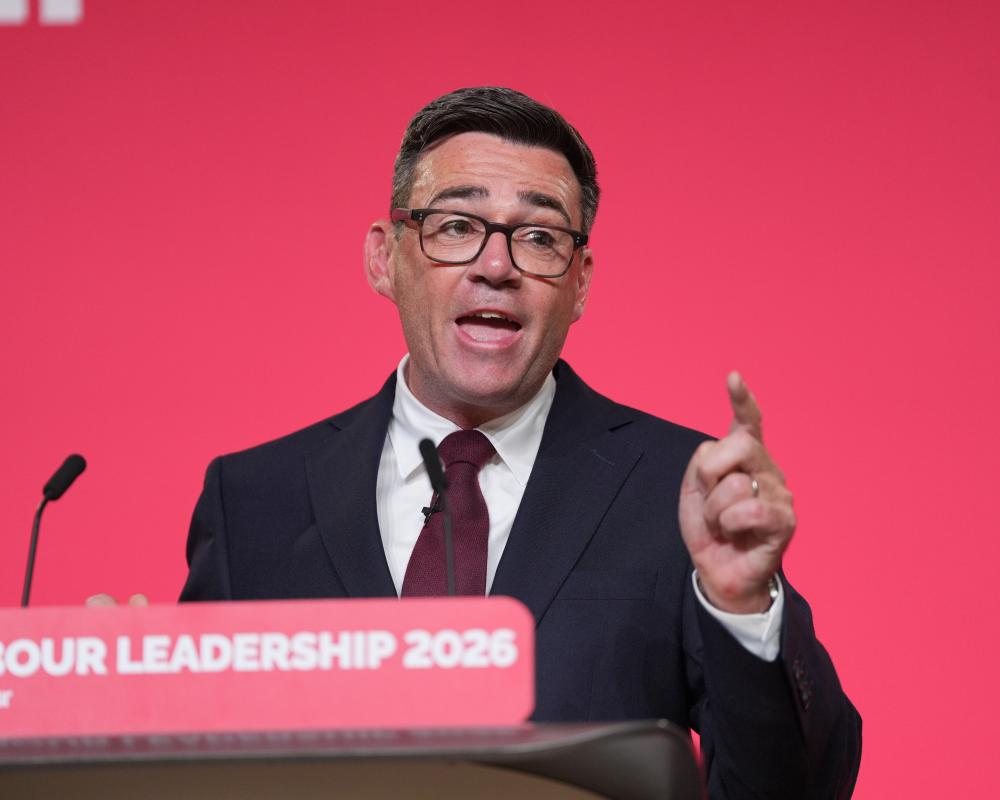
Andy Burnham has been elected leader of the Labour Party, positioning himself as a unifying figure ready to challenge the rise of right-wing populism in Britain. He will succeed Keir Starmer as prime minister on Monday.
By George Kensington · 5 min read
Andy Burnham has declared himself ready to “beat Britain’s new right” with a fresh, united approach as he formally became the leader of the Labour Party, paving the way to take over as prime minister on Monday. The former mayor of Greater Manchester won overwhelming support from MPs, trade unions, and party branches, making him the only candidate to succeed Sir Keir Starmer.
In his acceptance speech, Burnham struck a conciliatory yet determined tone, saying the country is “crying out for a new politics” that moves beyond the divisions of recent years. He promised to give people “hope back” and outlined a plan focused on five key priorities to “make us better.” The prime minister-in-waiting emphasised that his leadership would be defined by action, not rhetoric, and that he intends to govern for the whole of the United Kingdom.
Burnham’s rise to the top of British politics marks the culmination of a long political journey. He served as a cabinet minister under Gordon Brown, later became the mayor of Greater Manchester, and has consistently positioned himself as a figure capable of bridging the gap between the party’s traditional working-class base and its more progressive urban supporters. His victory was widely expected after Starmer announced his intention to step down, but the scale of his support underscored the party’s desire for unity ahead of the next general election.
The transition of power will take place on Monday, when Burnham will be formally appointed prime minister by the monarch. He will inherit a government facing significant challenges, including a sluggish economy, strained public services, and the ongoing fallout from Brexit. His immediate task will be to assemble a cabinet that reflects the broad coalition that backed his leadership bid, while also setting out a legislative agenda that can command support across a divided parliament.
Political analysts have noted that Burnham’s emphasis on defeating the “new right” signals a strategic shift for Labour. Rather than simply defending the record of the Starmer years, Burnham appears intent on framing the next election as a choice between his vision of a more inclusive, interventionist state and the populist nationalism espoused by parties on the right. His speech deliberately avoided personal attacks on opponents, instead focusing on the need for a “better kind of politics” that restores trust in democratic institutions.
Reaction from within the Labour Party has been broadly positive, with senior figures praising Burnham’s ability to connect with voters who feel left behind by globalisation and technological change. However, some on the left of the party have expressed caution, urging him not to abandon the progressive policies that won him support among younger members and trade unions. Burnham has sought to reassure them by pledging to maintain Labour’s commitment to public ownership of key industries and a green industrial strategy.
Outside the party, the response has been more mixed. Conservative leaders have criticised Burnham as a “career politician” who lacks the experience needed to lead the country, while Liberal Democrats have called on him to commit to electoral reform. Burnham dismissed such criticism as “the noise of the old politics” and insisted that his record as mayor of a major city region demonstrated his ability to deliver tangible improvements in people’s lives.
As he prepares to enter Downing Street, Burnham faces the immediate challenge of uniting a party that has often been divided between its moderate and left-wing factions. His success in doing so will likely determine whether Labour can build a durable governing coalition capable of winning the next general election. For now, however, the mood among Labour supporters is one of cautious optimism, with many hoping that Burnham’s promise of a “new politics” will translate into real change for the country.