
Business 110
Dacia CEO Urges EU to Freeze Small Car Rules to Cut Prices
In this issue
Business 110
Dacia CEO Urges EU to Freeze Small Car Rules to Cut Prices
Culture 89
1988 Porsche 911 Carrera Targa G50 with Rebuilt Engine Heads to Auction
Economy 30
HMRC is writing to low earners about pension top-ups averaging about £70
News 124
Aftermarket Trackers Recover 99% of Stolen Cars as Factory Systems Fail
Politics 103
Met police open inquiry into alleged foreign donations to Reform UK
Sports 231
AMG GT Black Series Spied With Radical Aero Ahead of Nürburgring Record Attempt
Technology 117
BMW Confirms Next 3 Series Will Retain Plug-In Hybrid Power
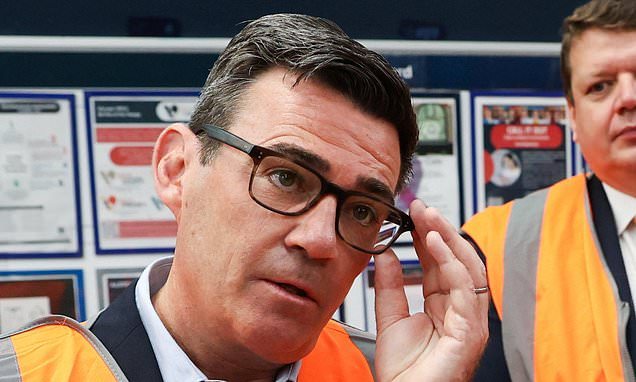
Prime Minister Andy Burnham’s government has exposed a vacuum in Conservative and Reform party opposition, with critics accusing the Tories of relying on outdated rhetoric rather than fresh ideas. Economic warnings and foreign policy engagements add to the challenges facing the right.
By George Kensington · 5 min read
Britain’s Conservative and Reform parties are finding it increasingly difficult to mount an effective opposition against Prime Minister Andy Burnham’s government, as the new Labour administration consolidates its agenda and exposes a lack of coherent alternatives from the right. Political commentators note that while Burnham has moved quickly to implement domestic reforms and engage in foreign policy, the opposition has struggled to offer substantive critiques, often resorting to historical analogies that fail to resonate with the current political landscape.
Conservative leader Kemi Badenoch recently delivered a speech accusing Burnham of seeking to revive the turmoil of the 1970s, warning of «endless strikes, rubbish not being collected, bodies not being buried, inflation at 25% and a chancellor going cap-in-hand to the IMF». However, critics describe her remarks as more incantation than argument, a ritualistic invocation of Margaret Thatcher’s legacy rather than a serious policy challenge. The prime minister’s appointment of a chancellor named Healey and the imposition of price controls on buses have done little to support the claim that his government is a retrograde step, according to analysts.
The broader problem for the right, observers argue, is that Burnham’s leadership has filled a void left by the previous government’s internal divisions and the rise of Reform UK, which had focused on attacking former Prime Minister Keir Starmer. With Starmer self-destructing and ultimately replaced by Burnham, the opposition now faces a more capable and popular leader, making it harder to land political blows. «The Tories and Reform had it easy when Keir Starmer was self-destructing, but a new PM with ideas exposes how vacant the opposition has become,» wrote Guardian columnist Rafael Behr.
Economic headwinds are adding pressure on the government but also complicating opposition attacks. The National Institute of Economic and Social Research (NIESR) has warned that Burnham’s administration will have «no scope» for extra borrowing to fund cost-of-living support, citing more persistent inflation than previously expected. This constraint limits the government’s ability to deliver on spending promises, but the opposition has yet to articulate a credible alternative fiscal strategy. Instead, the right has focused on cultural and historical grievances, which may fail to attract voters concerned about day-to-day living costs.
On the international stage, Burnham has sought to project strength and continuity. He recently hosted Ukrainian President Volodymyr Zelensky at Portsmouth naval base, a visit that underscored Britain’s ongoing support for Kyiv in its war against Russia. Zelensky then flew to Washington for talks with Donald Trump, but the UK leg of the trip was seen as a diplomatic win for Burnham, reinforcing his image as a statesman. The Conservative and Reform parties have offered little public response to this foreign policy engagement, leaving them on the sidelines of a major geopolitical event.
The vacuum on the right has prompted internal debate about the future direction of conservative politics in Britain. Some within the Tory party argue that Badenoch needs to move beyond Thatcher-era nostalgia and develop a modern policy platform that addresses issues like housing, public services, and economic productivity. Others fear that Reform UK, led by figures such as Nigel Farage, continues to siphon votes from the right without offering a credible path to government. The inability to mount a united front against Burnham is seen as a structural weakness that could persist for some time.
For now, the prime minister appears to be benefiting from a political climate in which the opposition is defined more by what it opposes than by what it proposes. As Burnham’s government tackles challenges ranging from inflation and public sector strikes to foreign policy, the right’s struggle to find its voice may determine whether Labour consolidates power or faces a credible challenge at the next general election. The coming months will test whether the Conservatives and Reform can adapt or whether they remain trapped in a political chill of their own making.