
Business 110
Dacia CEO Urges EU to Freeze Small Car Rules to Cut Prices
In this issue
Business 110
Dacia CEO Urges EU to Freeze Small Car Rules to Cut Prices
Culture 89
1988 Porsche 911 Carrera Targa G50 with Rebuilt Engine Heads to Auction
Economy 30
HMRC is writing to low earners about pension top-ups averaging about £70
News 124
Aftermarket Trackers Recover 99% of Stolen Cars as Factory Systems Fail
Politics 103
Met police open inquiry into alleged foreign donations to Reform UK
Sports 231
AMG GT Black Series Spied With Radical Aero Ahead of Nürburgring Record Attempt
Technology 117
BMW Confirms Next 3 Series Will Retain Plug-In Hybrid Power
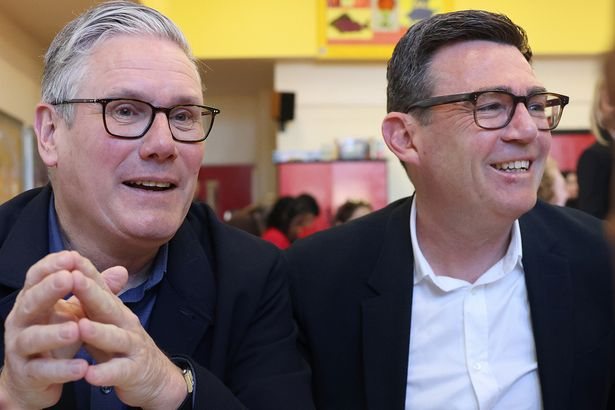
Outgoing Prime Minister Keir Starmer has expressed confidence that the Labour Party can secure a second term in office under the leadership of Andy Burnham, who is set to take over as party leader and prime minister.
By George Kensington · 5 min read
Outgoing Prime Minister Sir Keir Starmer has declared that the Labour Party is in «good shape» and can win the next general election under the leadership of Andy Burnham. In his final newspaper interview before stepping down, Starmer expressed confidence that the party he led to a landslide victory in 2024 is well-positioned to secure a second term under his successor.
Burnham, the former mayor of Greater Manchester, is poised to become Labour leader on Friday and will formally become prime minister after the weekend. The transition marks a significant moment for the party, which has governed since 2024 under Starmer’s leadership. Starmer told The Mirror that Burnham is inheriting a party that is united and ready for the challenges ahead.
«I believe Andy can win the next election,» Starmer said. «The party is in good shape. We have delivered on our promises, and the foundations are there for continued success.» The outgoing prime minister’s endorsement comes as Burnham prepares to take the reins of government amid a complex domestic and international landscape.
Starmer’s final days in office have been marked by a flurry of activity. He made a farewell visit to Kyiv, where he unveiled a £255 million package to fund Ukrainian fighter jets and reiterated that UK support for Ukraine «will not waver» under Burnham’s leadership. During the visit, Starmer was awarded another medal by Ukrainian officials, underscoring the close ties between the two nations.
In a separate move, Starmer appointed London Mayor Sadiq Khan as a peer in the House of Lords. The appointment, made just days before Starmer stands down, potentially opens the door for Khan to join Burnham’s cabinet in the future. Khan, one of Labour’s most high-profile mayors, has long been tipped for a peerage. Starmer was reportedly keen to put him in the Lords immediately after the May local elections to shore up Labour’s progressive flank.
Burnham, who has served as mayor of Greater Manchester since 2017, is expected to pledge to be «unashamedly Labour» when he becomes party leader. His rise to the top of British politics has been years in the making, following a career that included serving as a cabinet minister under Gordon Brown and as a key figure in the Labour Party’s northern base. He will walk through the doors of 10 Downing Street on Monday, marking the culmination of a political journey that has seen him become one of the most recognisable figures in the party.
The transition of power comes at a critical time for the UK. Domestically, the government faces challenges including the cost of living, NHS waiting lists, and housing affordability. Internationally, the war in Ukraine continues to demand attention, and Burnham has signalled that he will maintain Starmer’s strong support for Kyiv. The outgoing prime minister’s final visit to Ukraine was intended to send a message of continuity, with Starmer emphasising that British backing for Ukraine is a bipartisan commitment that will endure beyond his tenure.
Starmer’s endorsement of Burnham is seen as a significant boost for the incoming leader. The two have worked closely since Burnham was elected mayor, and Starmer has often praised his successor’s ability to connect with voters in the north of England. Political analysts note that Burnham’s appeal in traditional Labour heartlands could be crucial to the party’s chances of winning a second term, particularly in the face of a resurgent Conservative Party and growing support for Reform UK.
Burnham is expected to announce his first cabinet in the coming days, with Khan’s peerage potentially paving the way for a senior role. Other key figures in the party, including Deputy Leader Angela Rayner and Chancellor Rachel Reeves, are expected to retain their positions. Burnham has indicated that he will prioritise economic growth, public service reform, and devolution, building on Starmer’s record of stabilising the economy after the turmoil of the Truss premiership.
As Starmer prepares to leave office, his legacy includes a decisive election victory, a reset of relations with the European Union, and a steadfast commitment to supporting Ukraine. He leaves behind a party that, by his own assessment, is well-equipped to continue governing. For Burnham, the task now is to prove that assessment correct and lead Labour into what promises to be a fiercely contested general election.