
Business 110
Dacia CEO Urges EU to Freeze Small Car Rules to Cut Prices
In this issue
Business 110
Dacia CEO Urges EU to Freeze Small Car Rules to Cut Prices
Culture 89
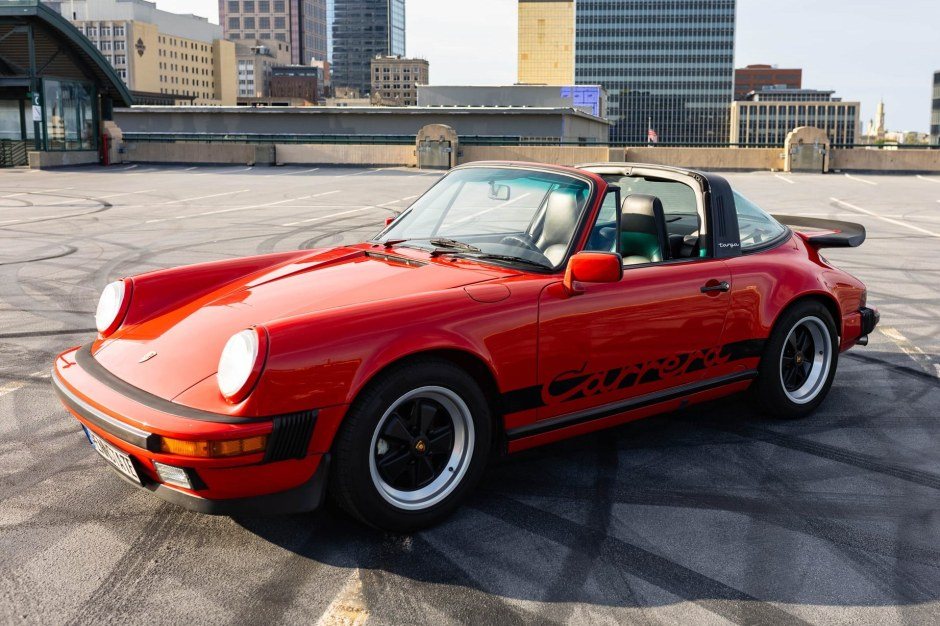
1988 Porsche 911 Carrera Targa G50 with Rebuilt Engine Heads to Auction
Economy 30
HMRC is writing to low earners about pension top-ups averaging about £70
News 124
Aftermarket Trackers Recover 99% of Stolen Cars as Factory Systems Fail
Politics 103
Met police open inquiry into alleged foreign donations to Reform UK
Sports 231
AMG GT Black Series Spied With Radical Aero Ahead of Nürburgring Record Attempt
Technology 116
Waymo Expands Driverless Ride-Hailing to Las Vegas
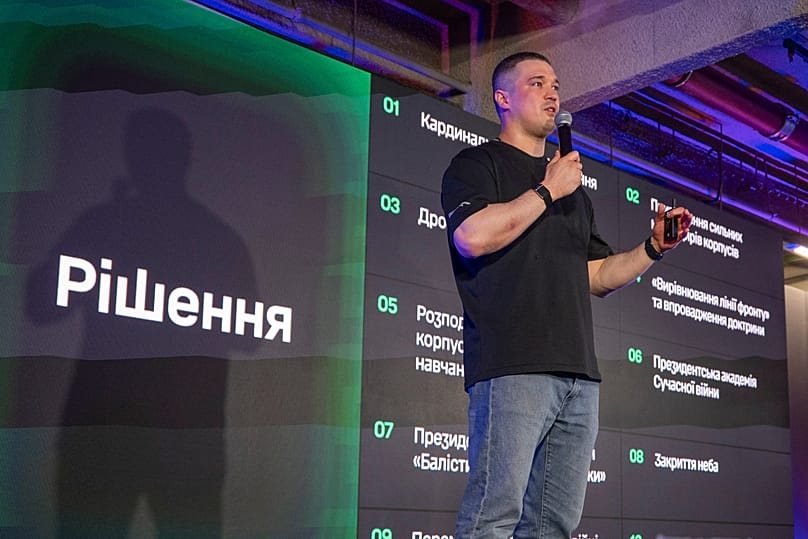
Ukrainian President Volodymyr Zelensky dismissed Defence Minister Mykhailo Fedorov after less than a year in office, citing failure to complete three priority tasks and a deepening conflict with the military command.
By Charlotte Redford · 6 min read
Ukrainian President Volodymyr Zelensky has dismissed Defence Minister Mykhailo Fedorov, ending a turbulent tenure marked by unfinished reforms, a public clash with the military leadership, and questions over the minister's focus on technology projects at the expense of core defence tasks. The decision, confirmed by presidential sources, removes a figure who had built a powerful independent public profile but failed to deliver on the three main objectives set by Zelensky in January 2026.
Fedorov was appointed on 14 January 2026, and just two weeks later, on 30 January, Zelensky publicly outlined three priority tasks: closing the airspace and strengthening air defence, solving the problem of forced mobilisation and so-called «busification» (the practice of forcibly conscripting men on the streets), and launching a genuinely functioning contract-based army model. Drones, technological substitution of artillery, and reducing overpayments were mentioned separately, not as primary goals.
An assessment of Fedorov's performance shows that none of these three tasks were completed. While the Ministry of Defence reported increased effectiveness in intercepting drones and cruise missiles, the airspace was not fully closed. Structural reform of the Territorial Recruitment Centres (TCC) remained in the planning stage, although automation of approximately 90% of deferrals through the «Reserve+» system was achieved. The new contract system was only launched as an experimental first phase on 15-16 June 2026, with a timeline extending to 2028, making it premature to claim a fully operational contract army.
Instead of focusing on these priorities, Fedorov concentrated heavily on technological and drone-related projects. His final report listed 22 achievements, the vast majority of which related to drones, robotic systems, the Brave1 Market, combat points systems, procurement of equipment and weapons, grants to manufacturers, long-range strikes, missile programmes, defence exports, and artificial intelligence. Only one of the 22 points addressed the transformation of service conditions and contracts. The TCC and the «busification» problem were not directly mentioned in the list of accomplishments.
The scale of the financial and technological infrastructure built under Fedorov is substantial. According to official Ministry of Defence data, in less than a year, more than 400 units ordered equipment worth over 33 billion hryvnias through the Brave1 Market. Over 500,000 drones were ordered, and the catalogue contained more than 800 products. The state ensures payment and delivery through the DOT-Chain Defence system. Data from DELTA, Mission Control, and other systems is used to form centralised procurement needs. This infrastructure connects combat effectiveness data, point accrual, product selection, manufacturers, state payment, and future centralised purchases. While the existence of such a system does not indicate corruption, its scale makes an audit of algorithms, conflicts of interest, manufacturer access, and distribution of state funds essential.
A significant point of contention is that Fedorov publicly claimed political capital for system-wide military operations. His final report included achievements such as the «logistical lockdown» of the Russian army, the beginning of the isolation of Crimea, increased interception rates of aerial targets, the «Ashan» operation that allegedly halted a mechanised offensive for six months, returning the initiative to Ukraine on the battlefield, and confirmed enemy losses and record results from drone units. These results, however, are the product of the General Staff, military command, Unmanned Systems Forces, SBU, HUR, Navy, specific units, and manufacturers, not the work of a single minister. The question arises: where does legitimate ministerial reporting on created infrastructure end, and personal appropriation of military operational results begin?
The conflict with the military command proved decisive. On 16 July, Fedorov publicly confirmed that he had proposed to Zelensky that Commander-in-Chief Oleksandr Syrsky be replaced. The president did not agree. According to Fedorov, after this, most Ministry of Defence initiatives faced resistance, and the conflict ended with an ultimatum from the commander-in-chief. Fedorov acknowledged Syrsky's contributions to the defence of Kyiv, the Kharkiv operation, and the liberation of Kherson. This was not a rumour of personal animosity but a confirmed struggle over the direction of military policy and personnel control. The management conclusion is that the president chose between keeping the minister and preserving the existing vertical command structure of the army. According to sources from Ukrainska Pravda, the constant conflict between the Ministry of Defence and the military command was the main reason for the decision not to keep Fedorov in the new government.
Fedorov's final report, published on 15 July at 18:17, was a 22-point post that garnered millions of views. A separate text about what was not achieved, ending with the phrase «To be continued», appeared a minute later, followed by a video. This rapid publication sequence suggests a coordinated media campaign. The dismissal marks a significant shift in Ukraine's defence leadership, returning focus to the traditional military hierarchy and the unfinished business of reforming the army's core structures.