Business 214
Obrist Group Files for Insolvency Owing $37 Million After HyperHybrid Failure
In this issue
Business 214
Obrist Group Files for Insolvency Owing $37 Million After HyperHybrid Failure
Culture 256
Frua-Bodied 1971 Rolls-Royce Phantom VI Heads to Auction After Pebble Beach Outing
Economy 40
US Petrol Prices Set Record for Longest Stretch Above $4 a Gallon
News 151
US Safety Agency Investigates 535,000 GMC Sierra Trucks Over Grille Deflector Fau…
Politics 113
Trump Appoints Barbera Thornhill to Lead US Anti-Trafficking Office
Sports 273
Bernie Plourd, 73, Becomes Oldest NHRA Top Fuel Licence Holder
Technology 296
Tesla Confirms Driver-Assist System Was Engaged in Fatal New Jersey Crash
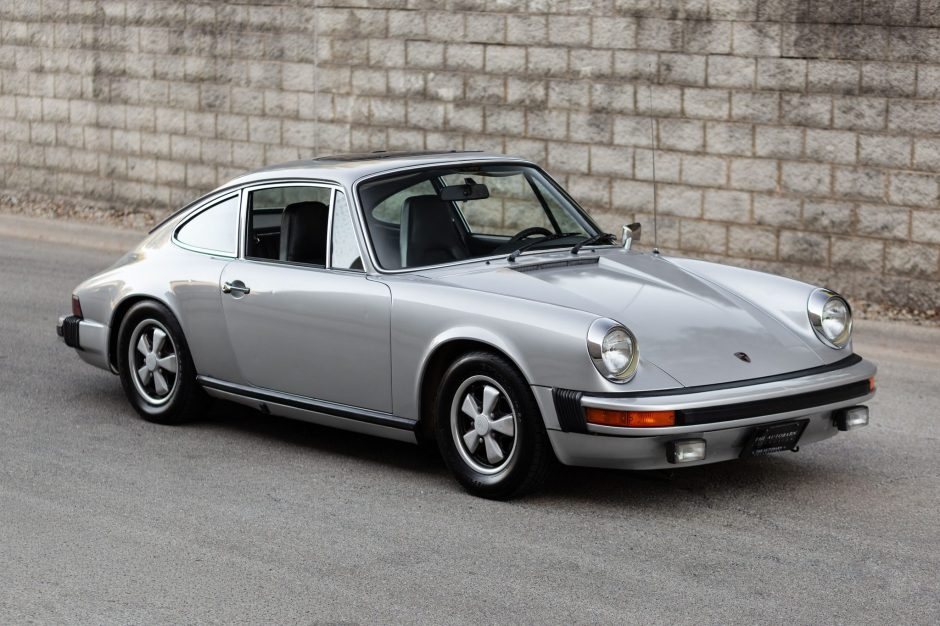
Porsche has unveiled the Mission S concept in New York, previewing a mid-engined production supercar that will sit above the 911 and feature combustion and hybrid powertrains.
By George Kensington · 5 min read
Porsche has unveiled the Mission S concept in New York, a striking design study that previews a new mid-engined flagship supercar set to be positioned above the 911. The concept introduces the marque's revamped styling direction under new design chief Tobias Sühlmann and confirms that a production version is already under development, underpinned by an all-new platform.
Company boss Michael Leiters said Porsche is working internally on a highly flexible architecture that will accept pure-petrol and hybrid powertrains but will not accommodate an electric version. The decision marks a renewed commitment to combustion power at the top of the range, following the cancellation of the electric Mission X hypercar concept due to limited demand for high-end electric sports cars. «We will listen to the customer,» Leiters said. «We have the flexibility in the platform to do full internal combustion, hybrid and also plug-in hybrid. There won't be an EV on that platform because there is no demand in the segment for EV yet.»
The production Mission S will be a regular series-production model, likely built alongside the 911 at Porsche's Zuffenhausen plant, rather than a limited-run special. Its performance is expected to sit in the midpoint between the 911 and the 918 Spyder, the last mid-engined Porsche positioned above the 911 when it launched in 2013. Limited-edition variants are anticipated as part of Porsche's Sportwagenschmiede 35 strategy, which pushes the brand towards more premium positioning and higher-revenue models.
Design work on the concept was completed in just eight months. Sühlmann, previously design chief at McLaren and with experience at Volkswagen, Bugatti, Aston Martin and Bentley, replaced long-serving design boss Michael Mauer in February this year. He said Leiters called him one evening with a vision for a car that could sit above the 911. The resulting design draws heavily on Porsche heritage, with distinctive torpedo front lights, a large air intake on the front edge of the roof, and an aggressive rear diffuser and spoiler. The roofline is inspired by the 959, while the rear sculpting references the 911 GT1. Narrow LED daytime running lights follow the style introduced on the Taycan, and a large cooling fan sits above the rear engine bay.
«The Bauhaus rule is that form and function work together and that's vital in the exterior and interior of our cars,» Sühlmann said. «So the torpedo fenders that everyone knows sit higher than the bonnet, because it's very important when you drive our cars that you know where the wheels are standing and the car is ending.» Aerodynamic efficiency was a clear focus, reflecting Porsche's motorsport heritage, and includes a rear wing that retracts when not required. The Mission S also features narrow split rear light elements and telephone-dial wheels that echo those of the 928.
Inside, the cabin is stripped back and driver-focused, inspired by the 550 Spyder and 356. An analogue rev counter is one of five round instruments behind the steering wheel, with physical controls and displays. The position of the round instruments alters depending on the drive mode selected. There is no central touchscreen; instead, a smartphone can be attached to a retractable MagSafe mount. Other unusual elements include seatbelt buckles that attach to the centre console. The show car's paint reflects Porsche's motorsport heritage with specially developed shades of white and black chrome.
The production version remains in the early phases of development as Porsche works on the platform. Leiters confirmed the company is developing the architecture internally rather than adopting the mid-engined layout of sibling brand Lamborghini, which also underpinned the Audi Nuvolari concept. Future Porsche models will feature four-cylinder, V6, V8 and boxer engines, with a V8 the most logical fit for a new mid-engined range-topper. The extreme styling of the Mission S engine cover, with its large cooling fan inspired by the 917, hints at that direction. A flat-eight is another option; longtime Porsche tuner Ruf recently produced a 1000bhp version, and Porsche experimented with the layout for a stillborn 918 Spyder successor.
Porsche is reinvesting in combustion powertrains after moving away from its plan to go electric-only. In the medium term, it expects to offer a roughly 2:1 mix of combustion to EV models across its line-up, with internal combustion dominating at the higher end where EV demand is slower.
6