
Business 214
Obrist Group Files for Insolvency Owing $37 Million After HyperHybrid Failure
In this issue
Business 214
Obrist Group Files for Insolvency Owing $37 Million After HyperHybrid Failure
Culture 261
1936 Packard Super Eight Phaeton Heads to Auction in Indiana
Economy 40
US Petrol Prices Set Record for Longest Stretch Above $4 a Gallon
News 151
US Safety Agency Investigates 535,000 GMC Sierra Trucks Over Grille Deflector Fau…
Politics 113
Trump Appoints Barbera Thornhill to Lead US Anti-Trafficking Office
Sports 274
Middlesbrough Host Cardiff City in Championship Clash
Technology 301
Alef Flies Its Electric Car Over Tesla Roadster as Flying Vehicle Race Heats Up
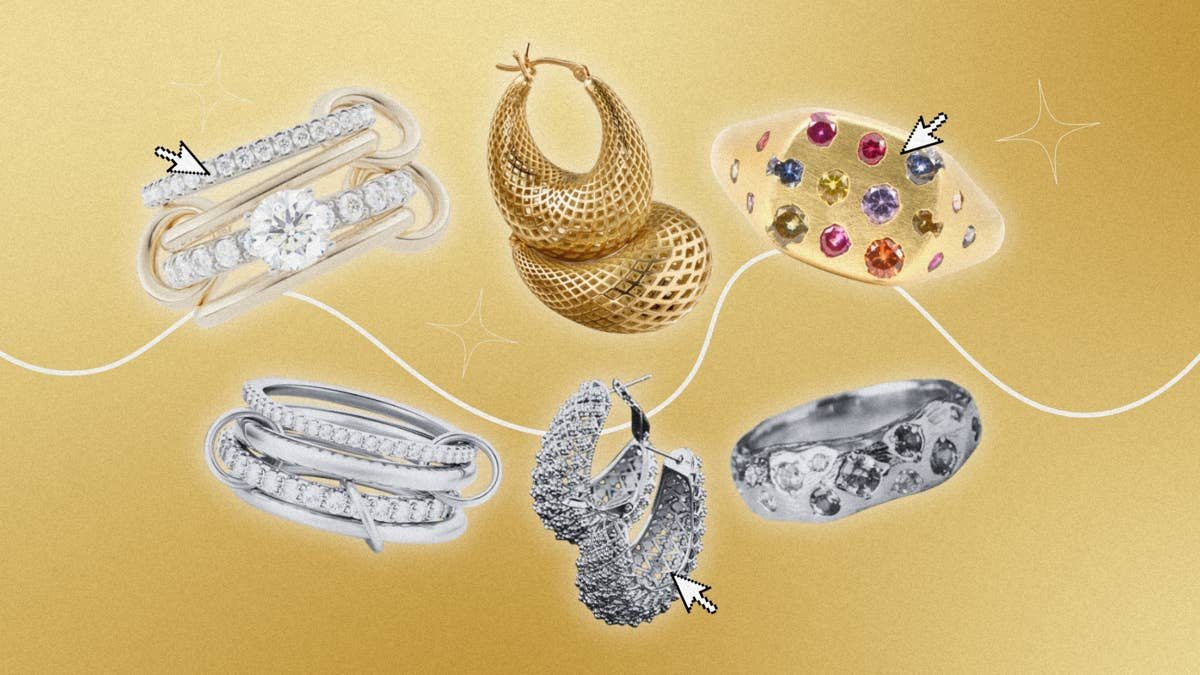
US jewellery brands are pursuing copyright and trademark claims against retailers and rivals as affordable lookalikes flood TikTok, Amazon and fast fashion, testing the limits of design protection.
By Eleanor Ellington · 5 min read
Fine jewellery houses are turning to the courts and to trademark law as so-called dupe culture spreads through the American market, with affordable lookalikes of signature designs appearing on TikTok, Amazon and fast-fashion retail shelves. The movement, in which shoppers deliberately seek out cheaper alternatives to recognisable pieces, has become a legal and commercial headache for brands of every size.
Dupes differ from fakes. A dupe is a lower-priced product that resembles an original design, while a fake is an illegal replica that copies a brand's trademarks. The distinction matters because dupes are technically legal in the United States, creating a loophole that competing businesses can exploit. Kristin Grant, a patent attorney and founder of Grant Attorneys at Law, said there is a growing market for budget-friendly alternatives to high-end products generally, and that in jewellery lookalikes can be manufactured quickly at a fraction of the cost of the originals.
Certain elements of jewellery design are difficult to protect, Grant added, which can leave room for a third party to argue that the copied elements were not protectable in the first place. That gap is what many jewellers are now trying to close, arguing that unique creations deserve stronger legal cover.
Several disputes are already under way. In February 2026, David Yurman filed a federal copyright infringement lawsuit in New York against TJX Companies, the parent of T.J. Maxx and Marshalls, claiming the retailer was selling jewellery virtually indistinguishable from its federally registered twisted cable designs. The same month, New York-based luxury jeweller Foundrae filed a copyright infringement suit against Pandora, alleging that Pandora's Talisman collection copies the exact visual expression, selection and arrangement of its signature medallions. Both cases remain ongoing.
They are two high-profile examples of a broader struggle. Many jewellers face a constant battle to protect their work from retailers, rival brands and anonymous traders on platforms such as TikTok and Instagram. Independent designer Polly Wales described the effort as fighting a hydra: cut off one head and two more appear. Reporting listings, sending letters and contemplating legal action can quickly become a second job, she said, and a profoundly uncreative one.
There are several established legal routes. Copyright protection is the most accessible and relatively inexpensive means of protecting jewellery designs, according to Grant, and can cover original artistic or expressive works. Common elements and shapes such as stars or hearts are not protected, nor are purely functional aspects of a piece. A design that combines common elements in an original way may be protected as a whole, but that protection can be relatively thin.
For the ornamental design of a piece, a design patent may offer stronger protection, Grant advised, though it can be costly and should ideally be sought before the piece is publicly disclosed. Design patents do not cover functional features such as a novel locking mechanism or a method of manufacture, which would require a separate utility patent. Trade dress protection, which covers the overall appearance of a product that consumers associate with a specific brand, can also apply, but Grant said that association can be tricky to establish. She recommends written agreements with manufacturers that address ownership of designs, files and moulds to reduce risk.
New York-based jeweller Ray Griffiths took the copyright and trademark route, registering his Crownwork technique in 2014. He developed it after years of restoring antique jewellery and becoming enamoured with the grid pattern found beneath old crowns and tiaras. A trademark lawyer he met at a trade show told him his look was distinctive and should be protected. The process took around three years, Griffiths said, but it proved good advice and has protected the brand ever since.
Others favour a creative defence: making pieces so labour-intensive that mass-market brands lack the tools or time to replicate them. Wales uses a signature Cast-Not-Set technique, throwing gemstones into molten gold to create one-of-a-kind pieces. The very thing that makes the work difficult to copy at scale is what makes it hers, she said: it misbehaves. Molten gold and gemstones do not behave like pixels, so while a silhouette can be imitated, reproducing the accidents, textures, colours and relationships between stones is another matter. Even so, her popular designs are often copied, sometimes by fellow jewellers.
6