
Business 110
Dacia CEO Urges EU to Freeze Small Car Rules to Cut Prices
In this issue
Business 110
Dacia CEO Urges EU to Freeze Small Car Rules to Cut Prices
Culture 89
1988 Porsche 911 Carrera Targa G50 with Rebuilt Engine Heads to Auction
Economy 30
HMRC is writing to low earners about pension top-ups averaging about £70
News 123
Aftermarket Trackers Recover 99% of Stolen Cars as Factory Systems Fail
Politics 104
Met police open inquiry into alleged foreign donations to Reform UK
Sports 231
AMG GT Black Series Spied With Radical Aero Ahead of Nürburgring Record Attempt
Technology 117
BMW Confirms Next 3 Series Will Retain Plug-In Hybrid Power
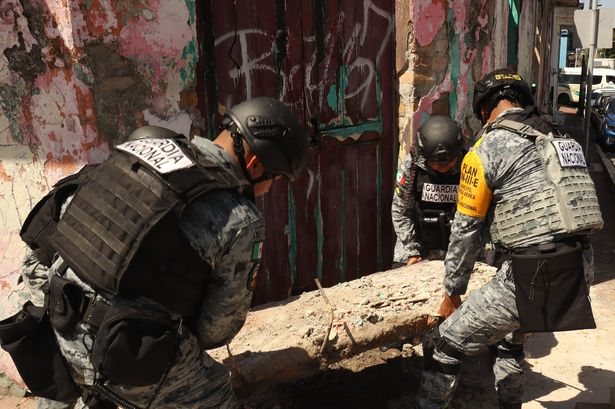
A powerful 7.3 magnitude earthquake struck off the coast of Chiapas, Mexico, prompting a tsunami warning and evacuations in Guatemala.
By Edward Beaumont · 5 min read
A powerful earthquake measuring 7.3 on the Richter scale struck off the coast of Puerto Madero in the Mexican state of Chiapas on Sunday, triggering a tsunami warning and ordering evacuations in neighbouring Guatemala. The tremor, which occurred at a shallow depth, was felt across a wide area, including parts of Guatemala and El Salvador, according to reports from local authorities and news agencies.
The earthquake struck at approximately 10:49 a.m. local time, with the epicentre located in the Pacific Ocean, about 100 kilometres southwest of Puerto Madero. The United States Geological Survey (USGS) initially reported the magnitude as 7.3, while some regional monitoring agencies recorded it as 7.4. The quake was followed by several aftershocks, though no immediate reports of major damage or casualties were available.
In response to the seismic event, the Pacific Tsunami Warning Center issued a tsunami warning for coastal areas within 300 kilometres of the epicentre, including the coastlines of Chiapas and Guatemala. Authorities in Guatemala ordered the evacuation of residents from low-lying coastal zones as a precautionary measure. Local emergency services were deployed to monitor sea levels and assist with evacuations.
The earthquake was felt strongly in the city of Tapachula, near the Guatemala border, where residents reported buildings swaying and objects falling from shelves. In Guatemala City, the capital, office workers evacuated high-rise buildings as a precaution. Social media footage showed people gathering in streets and open spaces, while schools and public buildings were temporarily closed for safety inspections.
Mexico's National Seismological Service reported that the earthquake was the result of tectonic activity along the Middle America Trench, where the Cocos Plate subducts beneath the North American Plate. This region is known for frequent seismic activity, with several significant earthquakes recorded in the past century. The 2017 Chiapas earthquake, which measured 8.1 and caused widespread damage and loss of life, remains a stark reminder of the region's vulnerability.
In Guatemala, the National Coordinator for Disaster Reduction (CONRED) activated its emergency protocols, urging residents in coastal departments such as San Marcos, Retalhuleu, and Escuintla to move to higher ground. CONRED officials stated that tsunami waves could reach heights of up to one metre above tide levels, posing a risk to beaches, harbours, and coastal infrastructure. Fishing communities were particularly advised to remain vigilant.
El Salvador's Environment Ministry also issued a tsunami alert for its coastline, though no evacuations were immediately ordered. The ministry warned of possible strong currents and abnormal sea level changes, advising boat operators to stay in port until further notice. In Mexico, the navy deployed patrol vessels to assess the situation and assist with any necessary maritime evacuations.
The earthquake disrupted telecommunications in some areas, with reports of intermittent mobile phone and internet services. Power outages were reported in parts of Chiapas, though electricity was restored within hours. Hospitals and emergency services remained on standby, and the Mexican Red Cross mobilised teams to provide medical assistance if needed.
Seismologists noted that the earthquake occurred along the Pacific Ring of Fire, a horseshoe-shaped zone of intense tectonic activity that encircles the Pacific Ocean. This region is responsible for approximately 90 per cent of the world's earthquakes, and the Mexico-Guatemala border area is particularly prone to large seismic events due to the complex interaction of several tectonic plates.
As of late Sunday afternoon, the tsunami warning remained in effect for several hours, with authorities monitoring tide gauges and ocean buoys for any signs of abnormal wave activity. No significant tsunami waves had been reported by early evening, but officials cautioned that the threat could persist for several hours after the main shock. Residents were advised to stay away from beaches and coastal roads until the all-clear was given.
The earthquake serves as a reminder of the importance of early warning systems and disaster preparedness in seismically active regions. Both Mexico and Guatemala have invested in seismic monitoring networks and public education campaigns in recent years, but the scale of the event underscores the ongoing need for vigilance and rapid response capabilities.