
Business 110
Dacia CEO Urges EU to Freeze Small Car Rules to Cut Prices
In this issue
Business 110
Dacia CEO Urges EU to Freeze Small Car Rules to Cut Prices
Culture 89
1988 Porsche 911 Carrera Targa G50 with Rebuilt Engine Heads to Auction
Economy 30
HMRC is writing to low earners about pension top-ups averaging about £70
News 123
Aftermarket Trackers Recover 99% of Stolen Cars as Factory Systems Fail
Politics 104
Met police open inquiry into alleged foreign donations to Reform UK
Sports 231
AMG GT Black Series Spied With Radical Aero Ahead of Nürburgring Record Attempt
Technology 117
BMW Confirms Next 3 Series Will Retain Plug-In Hybrid Power
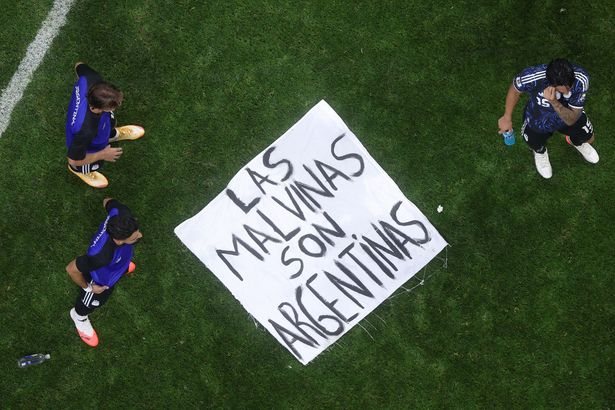
The White House has supported Argentina players who displayed a Falklands banner after their World Cup semi-final win over England, as FIFA faces calls to ban those involved from the final.
By George Kensington · 6 min read
The White House has sided with Argentina in a growing diplomatic row over a banner referencing the Falklands Islands that was displayed by players following their World Cup semi-final victory over England. The incident has sparked calls for the Argentine players involved to be banned from Sunday's final, putting FIFA under pressure to take disciplinary action.
The banner, which was shown to cameras after Argentina's win, has reignited tensions surrounding the long-standing sovereignty dispute between the United Kingdom and Argentina over the Falklands, known in Spanish as the Malvinas. The gesture was widely interpreted as a political statement, drawing immediate criticism from British officials and football authorities.
The United States administration has now publicly backed the Argentine players, a stance that adds a significant geopolitical dimension to the controversy. The White House's position was confirmed amid ongoing discussions between FIFA and US officials, including over the World Cup final venue, which is set to be held at MetLife Stadium in New Jersey.
Calls for sanctions against the Argentine players have intensified in the UK, with some politicians and commentators urging FIFA to impose bans that would prevent them from participating in the final against the winners of the other semi-final. The Football Association has not yet issued an official statement, but the matter is understood to be under review by FIFA's disciplinary committee.
The Falklands issue remains a deeply sensitive topic in both countries. Argentina claims sovereignty over the islands, which have been under British control since 1833, a claim that led to a brief but bloody war in 1982. The conflict claimed the lives of 255 British servicemen, three Falkland Islanders, and 649 Argentine personnel. The banner display has therefore been seen by many as a deliberate provocation, particularly in the context of a high-profile sporting event.
FIFA, world football's governing body, has so far refrained from making a definitive ruling on the matter. However, the organisation is facing mounting pressure to act decisively to prevent the politicisation of the tournament. The World Cup has historically been a stage for political statements, and FIFA's statutes prohibit political interference in the sport, but the line between celebration and political messaging is often contested.
The White House's backing of Argentina may complicate any potential sanctions. The United States is co-hosting the 2026 World Cup alongside Canada and Mexico, and the tournament's success depends on maintaining good relations with all participating nations. A ban on Argentine players could provoke a diplomatic backlash from Buenos Aires, a key US ally in Latin America.
Meanwhile, preparations for the final continue. MetLife Stadium in East Rutherford, New Jersey, is expected to host the showpiece event, although FIFA has held crisis talks with White House officials over concerns related to smoke from Canadian wildfires that could affect air quality in the region. The venue decision was finalised after these discussions, with organisers confident that the match can proceed safely.
The controversy has overshadowed what was otherwise a thrilling semi-final between England and Argentina, which ended in a narrow victory for the South American side. England's campaign under manager Thomas Tuchel came to an agonising end, but the team's performance has been widely praised. The focus now shifts to whether FIFA will take formal action against the Argentine squad ahead of the final.
Legal experts have noted that FIFA's disciplinary code allows for sanctions against players or teams that bring the sport into disrepute or engage in political acts. However, the governing body has often been reluctant to impose severe penalties in such cases, preferring to issue warnings or fines. A ban from the final would be an unprecedented step and would likely face legal challenges from the Argentine Football Association.
The row also highlights the broader intersection of sport and international politics. The Falklands dispute has flared up repeatedly at sporting events, most notably during the 1986 World Cup when Diego Maradona scored the infamous «Hand of God» goal against England. The current incident suggests that the issue remains as emotive as ever, particularly when the two nations meet on the football pitch.
As the world waits for FIFA's decision, the Argentine players remain focused on the final, while England's players have returned home to a heroes' welcome. The coming days will determine whether the banner controversy results in sporting sanctions or remains a political footnote to an otherwise memorable tournament.