Business 148
Tesla begins volume production of Semi electric truck at Nevada plant
In this issue
Business 148
Tesla begins volume production of Semi electric truck at Nevada plant
Culture 153
2021 Toyota Land Cruiser Heritage Edition Heads to Auction
Economy 33
Bitcoin and Ethereum Surge to Levels Last Seen in January
News 132
Sarandon and Einbinder arrested at anti-Netanyahu protest in New York
Politics 107
US Lawmakers Move to Permanently Ban Chinese Cars
Sports 246
Alonso Buys Most Expensive Bugatti Veyron Ever Built
Technology 171
LexisNexis and IMS Bring Driving Scores to Insurer Apps Without Dongles
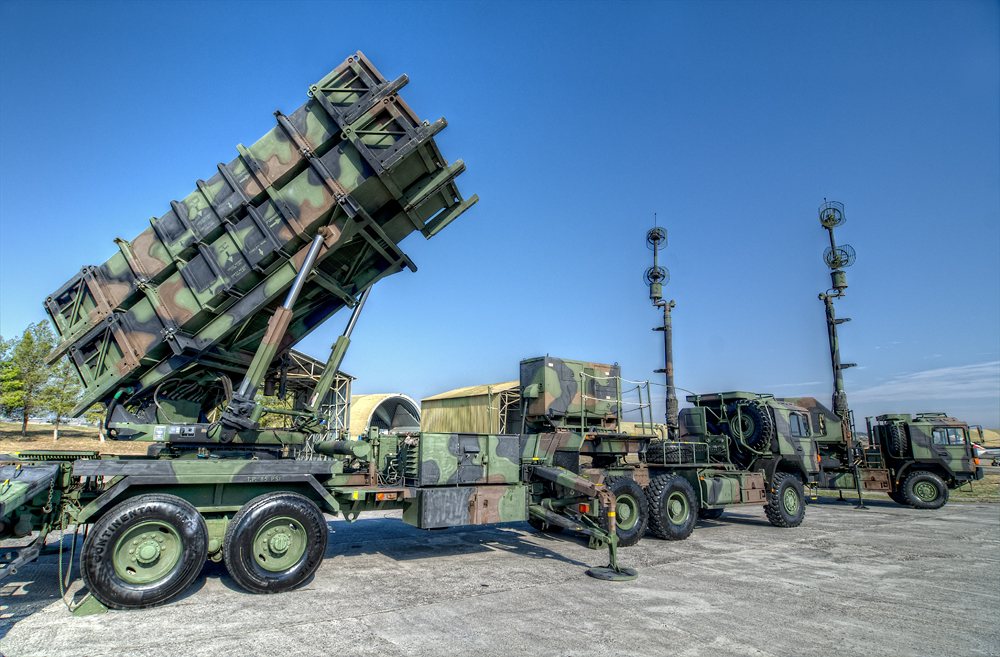
The continent knows it needs more interceptors. The harder choice is whether governments will release what they have now while factories take years to catch up.
By Edward Beaumont · 4 min read
Leadership is easiest when a policy has no immediate cost. Europe’s Patriot shortage presents the opposite case. Supporting Ukraine with interceptor missiles can directly reduce a donor country’s own on-hand defense stock, and the replacement may take years. That makes the coming winter a test not simply of alliance rhetoric but of how governments make decisions under real scarcity.
A report attributed to Politico says Germany, Poland, Spain and Greece are reluctant to draw deeply from their Patriot inventories as the United States struggles to provide rapid replenishment. All four countries operate the system and have their own air-defense obligations. Their caution is therefore not irrational. The question is whether preserving every missile at home produces more security than using some of them against Russian ballistic weapons already being fired at Ukraine.
Ukraine’s requirement is measured in hundreds. European defense commissioner Andrius Kubilius said the country could need around 700 PAC-2 and PAC-3 interceptors over four winter months. By comparison, Lockheed Martin delivered 620 PAC-3 MSE missiles during all of 2025. The company has agreed to more than triple annual production capacity, but the expansion is part of a seven-year framework.
Industry is moving in the right direction. Germany is financing several hundred new Patriot missiles for Ukraine, while RTX plans to use a new production facility in Schrobenhausen to help supply GEM-T interceptors. The U.S. production base is also expanding. These programs will make future leaders less dependent on emergency transfers. They do not remove the need for current leaders to decide what to do with finite inventories now.
Kyiv has made that decision easier to structure. In July it appealed to nearly 40 partners to transfer missiles from existing stocks, with later deliveries replenishing the donors. The offer does not eliminate risk, but it defines it: a country temporarily holds fewer interceptors while possessing a clear route back to its planned inventory. In return, Ukraine receives protection during the period when its need is most acute.
The human consequence of delay is no longer hypothetical. During a major Russian strike on Kyiv in early August, Ukrainian forces failed to intercept the ballistic missiles in the attack. Patriot is the main ground-based system Ukraine relies on for that threat class. An advanced launcher without ammunition offers little comfort to people sheltering from a ballistic strike.
The leadership question is therefore one of sequencing rather than slogans. Governments have to set a minimum national reserve, decide what can be released above or temporarily below it, and tie each transfer to a credible replenishment path. That approach does not remove the risk of scarcity, but it makes the risk explicit and allows allies to share it rather than leaving Ukraine to absorb most of the immediate danger.
Russia is also forcing the pace. The Financial Times said on August 11 that Moscow produced roughly 70 ballistic missiles a month and launched 198 in the previous month. If that rate continues into a winter campaign against energy infrastructure, the leadership challenge will repeat after every major salvo. Europe can solve the structural problem by building more. Until then, it has to solve the political problem by deciding how much of today’s security reserve should be used where the threat is already real.
64