
Business 235
Geely's compact EV hits one million sales in two years
In this issue
Business 235
Geely's compact EV hits one million sales in two years
Culture 271
LS2-Powered 1989 Jeep Wrangler Laredo Heads to Auction
Economy 41
German Economists Set Income Threshold for the Upper Class
News 158
EU Loosens 2035 Emissions Targets in Move That Could Keep Petrol Cars Alive
Politics 115
Burnham launches crackdown on loud music on public transport
Sports 280
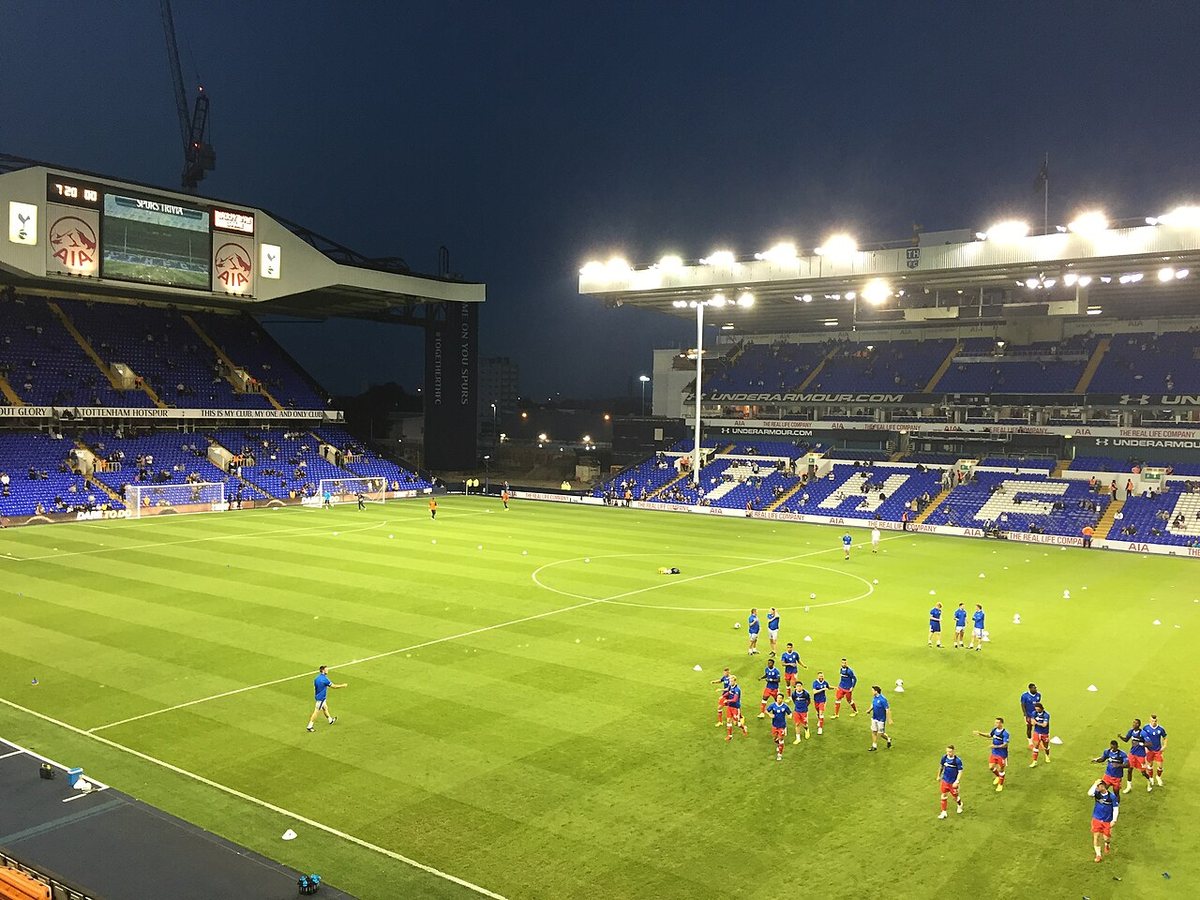
Tottenham beat Coventry as De Zerbi faces injury concerns
Technology 320
LiveWire to Unveil Two New Electric Motorcycles at EICMA

Saab transferred jet technology, wind-tunnel testing and aircraft cockpit layouts into its road cars, according to a review of the Swedish firm's engineering history.
By Edward Beaumont · 4 min read
Saab's reputation for building cars that felt different owed more to the drawing board than the advertising agency, according to a review of the Swedish manufacturer's engineering history. The company, formally Svenska Aeroplan Aktie Bolaget, or Swedish Aeroplane Corporation, was founded by armaments maker Bofors in 1937 to supply the national air force with fighters and bombers, and its move into car making after the Second World War carried that aeronautical expertise directly into its road vehicles.
Diversification became necessary in 1945, and wing engineer Gunnar Ljungström was given the task of creating a small, affordable car. His background was in aircraft work rather than motoring. «I was only as much of a car enthusiast as boys are generally,» he said of the project. «Of our 15 staff, perhaps two of us had driving licences.» The resulting 92, launched in 1949, was shaped by that inexperience in conventional car design. It featured pear-drop styling intended to slice through the atmosphere, an extremely light and rigid body, and no chassis in the normal sense. The car was also carefully stressed, a priority other manufacturers did not share.
The links between Saab's aircraft and car divisions were practical as well as promotional. From 1960, advertisements paired the supersonic Draken fighter with the new 96, highlighting its aerodynamic lines, strength and efficient engine. In 1964 the company introduced a «super-safe» braking system using dual independent master cylinders with hydraulic lines connecting the front and rear wheels diagonally. The Trollhättan plant's fuel systems testing unit was built so that in the event of an explosion the walls would blow outwards, a method borrowed from the company's aircraft division at Linköping.
Aerodynamics remained an unusually high priority. Wind-tunnel work helped the 99 of 1967 achieve a drag coefficient of 0.37, against 0.40 to 0.45 for most contemporary European saloons. Its profile was shaped to position the centre of sidewind pressure as close as possible to the centre of gravity, reducing angular disturbances. The interiors were similarly unorthodox. Saab explained that round dials were fitted as standard in aircraft because important information must be noted quickly, and that tests showed peripheral vision detected changes in the position of a large pointer more easily than changes in digital figures. The firm used that reasoning to promote its mid-1980s 900.
The company leaned heavily on its aeronautical image in advertising, pairing its Mach 2 Viggen fighter with the slogan «Nothing on earth comes close». One advertisement told buyers that while its air colleagues enjoyed talking about being one up on Jaguars, Phantoms and MiG-23s, they would enjoy being one up on Jaguars, BMWs and GTI-badged hatchbacks. The comparison was not entirely watertight: as one reader noted, the Viggen's turbofan was made by rival Volvo. Saab GB boss Allan Smith nevertheless said independent research showed the campaign succeeded.
Technical chief Stig-Göran Larsson assured questioners that Trollhättan's aerodynamicists sent their work to Linköping for checking, borrowed the cutting-edge Cray supercomputer there whenever its power and speed were needed for complicated problems, and shared information on composite materials for car parts. The conclusion was that the links did exist, and that the Saab 900 which appeared to turn into a roaring Viggen fighter was not merely a marketing device.
4